Wired to Feel Everything: Dating, Intensity, Rejection & Connection
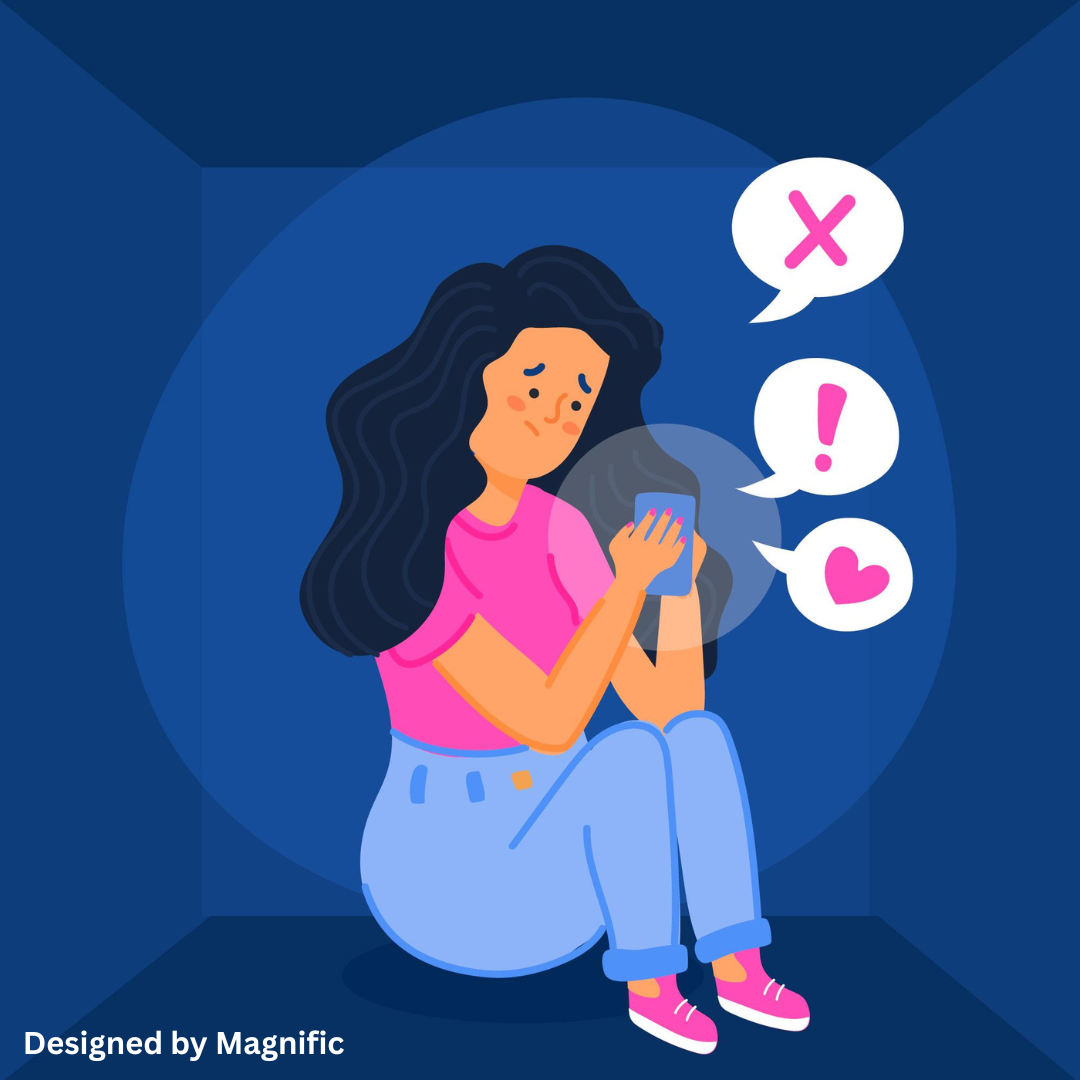
Dating with a differently wired brain (due to neurodivergence, trauma or both) can be challenging. Eva Crawford, LCSW-C, explains what’s happening in your brain & nervous system during the ups & downs and how to manage.
Dating requires a certain tolerance for vulnerability. You put yourself out there, you wait, you wonder, you try to read signals you're not sure are even there. Dating apps, in particular, are basically engineered to activate nervous systems: infinite novelty, intermittent reinforcement, constant ambiguity.
For many people, the experience can be uncomfortable but a necessary means to an end. For many neurodivergent people as well as people with trauma history, it can escalate quickly into something that feels urgent, consuming, or genuinely destabilizing. Understanding what's actually happening doesn't make the feelings disappear. But it changes what you do with them.
Rejection Sensitivity Dysphoria: When Ambiguity Reads as Threat
Rejection sensitive dysphoria, or RSD, is an intense emotional reaction to perceived or actual rejection or criticism. The word "dysphoria" matters here- this isn't garden-variety disappointment. Researchers have described RSD as involving "episodic attacks of physical and emotional pain, intense shame, and feeling ostracized" in response to perceived rejection (Dodson et al., 2024). People who experience it often describe it as a full-body experience similar to a panic attack.
RSD is strongly associated with ADHD, and increasingly recognized in autistic adults as well (Sandland, 2025). It's linked to differences in how the brain regulates emotion and processes social feedback- not a character flaw or a sign of immaturity, even though it often gets mistaken for both. Research consistently points to a neurobiological basis for these differences, with neuro-imaging studies identifying altered connectivity in brain regions involved in emotional regulation in people with ADHD- suggesting these intense responses are structural, not character-based. This isn't about being "too sensitive." It's about a nervous system that processes social information at a different intensity.
In dating, RSD tends to show up like this: a delayed text response feels intentional. A slightly flat tone in a message reads as disinterest. Canceled plans come across as "they have found somebody else." The nervous system is responding to ambiguity as if it were confirmed bad news, often before there's any real evidence that anything is wrong.
What makes RSD particularly painful in early dating is the gap between the internal felt experience and external context/perception. Internally, the pain is real and immediate. Externally, the trigger often looks small. That gap- between how big it feels and how small it looks- is where a lot of shame lives. The “I know I only knew them a few weeks, but I really thought they were different” kind of shame.
Limerence: When Your Brain Mistakes the Chase for Love
Limerence is a term coined by psychologist Dorothy Tennov in 1979 to describe an involuntary state of intense romantic obsession, characterized by intrusive thoughts, emotional dependency on the other person's validation, and a desperate need for reciprocation. It's often confused with falling in love- and for good reason, because it feels exactly like that. But the engine driving it is different.
For people with ADHD, increased susceptibility to limerence is rooted in dopamine. The ADHD brain doesn't regulate dopamine in a typical way- it craves stimulation, novelty, and reward. A new person who gives intermittent attention is, neurologically speaking, close to a slot machine: unpredictable reinforcement that creates stronger dopamine responses than consistent connection would (Plichta et al., 2009). The ambiguity doesn't dampen the feeling. It intensifies it.
This is why the hot-and-cold person so often feels more compelling than the kind, steady, available one. It's not a preference- it's brain chemistry.
Limerence can also function as a way out of the emotional flatness that many neurodivergent people find genuinely intolerable. That infatuated feeling lights up the nervous system, creates focus, and generates a sense of aliveness. Especially for people with co-occurring trauma or depression, the intensity of limerence can feel like relief from numbness or despair.
The distinction that matters clinically: healthy, sustainable love is rooted in safety, reciprocity, and genuine knowing of another person. Limerence is fueled by fantasy, pursuit, and the feeling that connection gives you- not the actual person in front of you. A useful question to sit with when you notice that electric pull: Am I drawn to this person for who they are, or to the feeling I get when I'm chasing them or they are giving me attention?
The Nervous System Connection
When a neurodivergent person in a limerent state or with RSD perceives a threat to connection- an unanswered message, a confusing signal, a moment of emotional distance- the nervous system can move quickly from engagement into defensive activation. That might look like anxiously over-texting, shutting down completely, or that specific awful feeling of being unable to think about anything else, even weeks into something that barely got started (Porges, 2011). In online dating, where ambiguity is essentially the whole environment, this can run the show without anyone realizing it- driving decisions that feel urgent in the moment but confusing in hindsight.
What Actually Helps
Name what's happening. Simply having language for RSD and limerence and an understanding of what is happening on a biological level reduces shame significantly. When you can say "I'm in an RSD spiral right now" instead of "I’m being overly dramatic," you create a small but meaningful gap between the feeling and the story you're building around it. You also pivot the reason this intense emotional experience is occurring to one rooted in your neurobiology instead of in your personal character.
Slow down the narrative and map your triggers. RSD and limerence are fast. They move from ambiguous signal to worst-case conclusion, or from flirtation to full-blown affection, in record time. Practices that build in a pause- a standing rule of waiting 20 minutes before responding to a text when activated, or giving yourself time between initial dates- can interrupt the intensity spiral before it fully ramps up. This creates room for intentionality: is that text what you really want to send? Was that date really as good as it felt the morning after? Therapy is also a useful place to identify the specific relational cues that kick off your RSD most reliably. When you can predict the pattern, you can meet it with curiosity instead of immediately mobilizing your whole defensive system.
Regulate the body first. When the nervous system is activated, insight alone doesn't help much. Somatic grounding- breathwork, orienting to the physical environment, movement- creates the physiological conditions for clear thinking. This is a pre-requisite to everything else.
Consider the role of your attachment history. Intense rejection sensitivity and limerence often have roots in early experiences of inconsistent attunement, criticism, or emotional unavailability. Dating activates attachment in everyone, but in neurodivergent people and/or people with trauma histories, it can activate it far more powerfully. Understanding your patterns isn't about blame. It's about knowing what you're working with so it doesn't work you.
A Note to Anyone Who Has Ever Been Called Too Much
It's worth knowing that the clinical picture is more nuanced than that. You're operating with a nervous system that processes emotional information at high volume, in a social context that was not designed with your wiring in mind. That's a real challenge. It's also workable.
You can learn to date in a way that works with your nervous system rather than against it. That usually involves more structure, more self-awareness, and more support than typical dating advice tends to account for. Therapy can be a space to identify and understand your patterns, learn how to regulate your nervous system, and build the kind of relationship with yourself that makes authentic connection with someone else possible.
If any of this resonates with you, we'd be glad to support you. At Starobin Counseling, we work with individuals navigating exactly these experiences- in dating, in other relationships, and in the lifelong work of caring for yourself.
References:
Dodson, W. W., Modestino, E. J., Ceritoğlu, H. T., & Zayed, B. (2024). Rejection sensitivity dysphoria in attention-deficit/hyperactivity disorder: A case series. Acta Scientific Neurology, 7(8), 23–30.
Jiang, X., He, Q., Lv, Y., & Wang, Y. (2025). Abnormal functional connectivity associated with emotional dysregulation in children with attention-deficit/hyperactivity disorder. Frontiers in Psychiatry.https://doi.org/10.3389/fpsyt.2025.1700693
Plichta, M. M., Vasic, N., Wolf, R. C., Lesch, K. P., Brummer, D., Jacob, C., & Fallgatter, A. J. (2009). Neural hyporesponsiveness and hyperresponsiveness during immediate and delayed reward processing in adult attention-deficit/hyperactivity disorder. Biological Psychiatry, 65(1), 7–14.
Porges, S. W. (2011). The polyvagal theory: Neurophysiological foundations of emotions, attachment, communication, self-regulation. W. W. Norton & Company.
Sandland, B. (2025). Neurodivergent experiences of rejection sensitive dysphoria expose the environmental factors too often overlooked. Neurodiversity, 3.https://doi.org/10.1177/27546330251394516
Tennov, D. (1979). Love and limerence: The experience of being in love. Scarborough House.