“No” and Other Accommodations
When it comes to invisible challenges that show up for neurodivergent people, there’s enormous value in uncovering how our brains do (and don’t) work. Naming what we struggle with is an invitation to start exploring solutions.
Accidental Accommodations
I spent many years in a position that involved staying present through phone calls in a resource center that no one reached out to on a good day. There was a lot of active listening - acknowledging the hard, staying curious about what “easier” might look like and remembering that every contact was a human who deserved to feel heard.
I wasn’t great at the listening part of this job when I started. I wasn’t terrible…I was friendly and kind and able to build a rapport with nearly every caller. But I was also really focused on getting to the “so what do we do about this” part of the call, when we’d match what the caller needed to the resources I could offer and all the puzzle pieces would click neatly into place. I didn’t have my ADHD diagnosis yet, but looking back it’s easy to see how it happened: a nonstop mental motor driving the impulse to keep moving from point A to B to C so I could enjoy the win at each finish line.
Supervision and coaching were really helpful. I learned to be more aware of each call’s dynamics and developed a bank of language to use when my role was to validate instead of solve. I also think that this skill-building would have stalled if I hadn’t accidentally created an accommodation.
I started to pull my knitting out during calls that required deeper focus. One stitch at a time, knitting diverted just enough of my mental energy to let me actually settle into the rhythm of each call. This extra focus gave me more opportunity to practice the skills I’d been taught, and eventually I was pretty good at “just” listening. I never stopped keeping small projects on my desk, but over time I relied on them less. They became a safety net instead of a necessity.
The Tricky Thing about Invisible Challenges
Invisible challenges (which sometimes make things hard enough that they can be called invisible disabilities) can be tricky. Even managing to notice them in ourselves takes significant self-awareness: Hard things are hard…but isn’t that because they’re supposed to be hard? Aren’t they this hard for everyone?
Accepting invisible disabilities in others is a challenge for entirely different reasons. Trusting someone’s experience - believing them when they describe what they feel and what they need - is an active stance. It’s not possible without regular habits of willingness and curiosity and grace.
Invisible challenges can make it hard to meet expectations - ones we have for ourselves, or ones that others have established. They also (usually) don’t relieve us of accountability. When it comes to invisible challenges that show up for neurodivergent people, there’s enormous value in uncovering how our brains do (and don’t) work. Naming what we struggle with is an invitation to start exploring solutions.
Humans have an astonishing ability to solve problems. Without even realizing what we’re doing, we create workarounds and develop quirks and adapt our environment and adopt behaviors that allow us to move through the world with more ease.
Even when we’re following our intuition, though, there can be value in stepping back to define the accommodations we’ve created (and why). When we’re lucky, those solutions complement our goals and enhance our experience. When we’re less lucky, our solutions create a new set of challenges.
One potential hiccup - that I won’t discuss in detail because there are so many wonderful resources on the topic - is that many neurodivergent people create solutions by masking. This camouflages the challenge, but it doesn’t actually fix the problem and often harms mental health and a person’s sense of identity.
No is My Hero
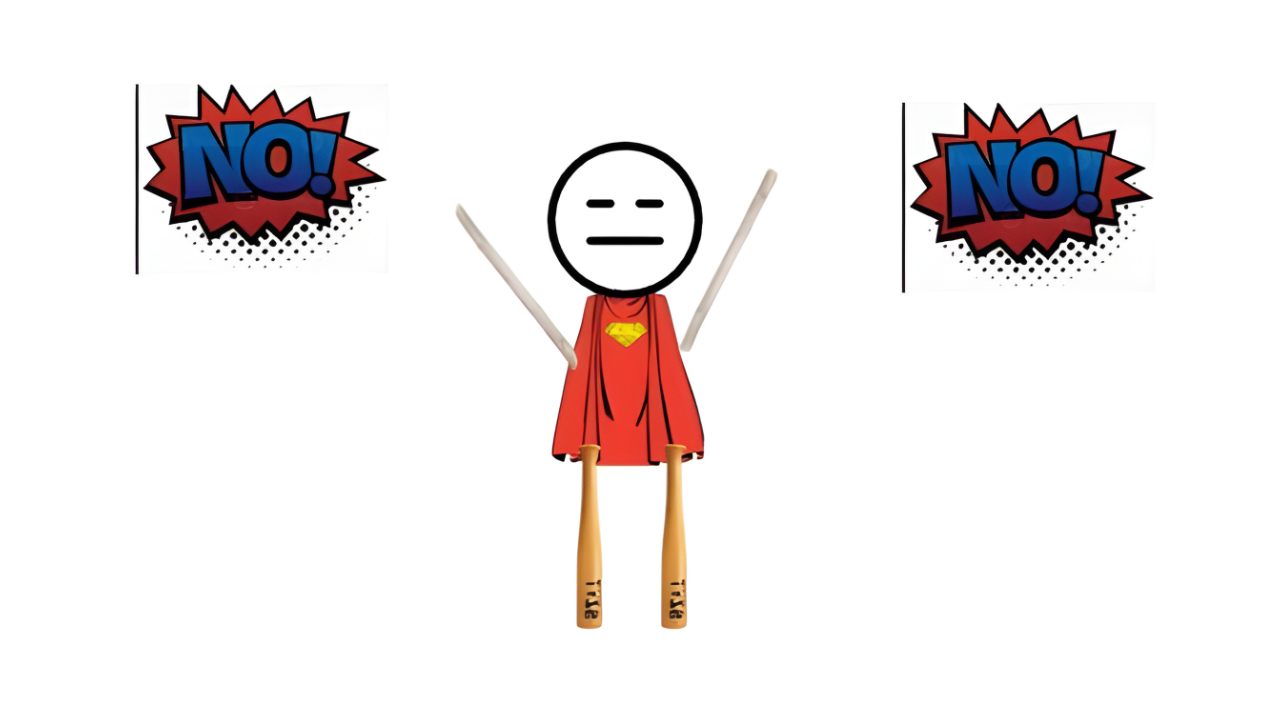
Another complication is that sometimes our instincts send us in the wrong direction. For years, my husband and I have given a heads up to any & every adult who was going to engage with our autistic child about their “automatic no.” There’s a pretty effective response - it essentially boils down to “play it cool, give time to reconsider, and if the answer is still no, consider it a hard no.” Anything other than that pretty effective response is absolutely not effective at all. Which ultimately means that the self-accommodation - the behavior my child is using to communicate what he needs - isn’t very effective either.
Recently, a school assignment asked students to describe their hero. I’m sharing these excerpts with my child’s permission. They opened with:
“The word no is my hero because if you say no people can’t do anything about it.
We are similar because we both say no.”
When I sat down to help them edit the first draft, we paused here. While I agreed that being able to draw a clear boundary is great, I observed that saying that the best thing about the word no is that if you say it “people can’t do anything about it” didn’t paint a very accurate picture of my child’s kind heart.
Although the opening was left unchanged, our conversation did lead to an elaboration:
“The word no matters to me because if you say no people are forced to stop and give you time.”
Someday, my child might agree that it’s helpful to learn new ways to ask people to pause. They might decide to try using some of the strategies we model daily. And then maybe things will come full circle as they take what they’ve learned to create novel - more effective - solutions of their own.
Want Support?
A great therapist can help untangle the hidden challenges you’re solving (and can help you figure out more effective solutions when they’re needed). DIY accommodations can be great, but sometimes formal accommodations are needed to address invisible challenges:
At work: The Job Accommodation Network offers accommodation and self-advocacy tools to workers with disabilities.
At school: The Partnership for Extraordinary Minds (xMinds) has great online resources with more extensive support available to families in Montgomery County
References
Dan Harris: The benefits of not being a jerk to yourself | TED Talk