“You’re Not Hearing Me!” Why we feel unheard and unseen in our relationships
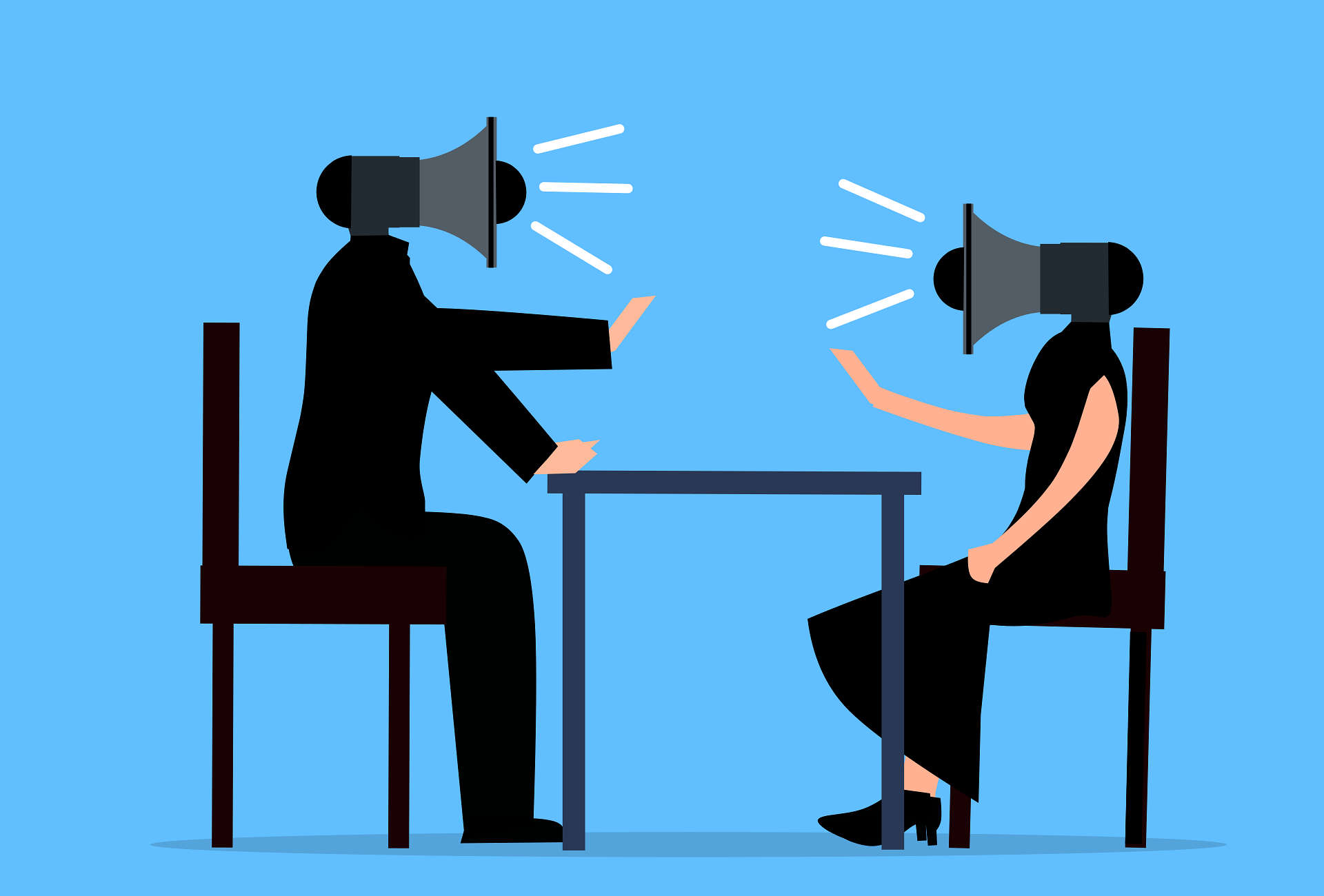
In this month’s blog, Valerie Kolick, LGPC breaks down four reactions that feel like love but land like rejection. Rebuilding intimacy & trust are possible when we learn how to “hold space.”
Holding Space Isn't What You Think It Is
A couple of months ago, I was introducing one of my closest friends, Gina, to a group of new friends.
I'd been looking forward to it for weeks. I wanted them to love her the way I loved her, and I wanted her to walk out of that night with three new people in her life. I set it all up perfectly, with good wine, great food, and a prayer for instant chemistry.
A little timid at first, Gina began telling a hilarious story about the two of us, and I watched the other women lean in. This was it. This was the moment they all became besties and we became the Fab Five.
So I helped.
"Gina, you forgot the part where…" I jumped in, filled in the detail she'd skipped, and landed the punchline myself.
Everyone laughed. It was a great line.
She didn't say much for the rest of the night.
This is the same mistake I see show up week after week in my therapist's office. It's a well-intentioned moment, and it still creates rupture and disconnection in a relationship. The story Gina was telling wasn't entertainment. It was her entrance into connection, and I was so invested in the outcome that I took the moment away from her. It was one correction, one interruption, delivered with total warmth by someone who wanted nothing but good things for her. Yet, she felt like I shut her down and shut her out.
I wasn't trying to take anything from her. I was trying to help. That's the part I want you to sit with, because that's the part that shows up in your marriage.
Your partner starts describing a bad day, and within ninety seconds you're telling them you had a bad day too and going right into your own story.
Your partner starts to name something that hurt them, and you jump in with the context they forgot, the traffic, the timeline, how they shouldn't be upset. Or you finish their sentence because you already know where it's going.
Your partner is crying, and it becomes too uncomfortable, so you move right to fixing their problem or telling them it's not worth being upset about.
None of that is cruelty. All of it is the same move: their feeling showed up in the room, it was uncomfortable to sit with, and you had the instinct to change it.
When a person learns that you can't tolerate their hard feelings, they don't stop having them. They stop bringing them to you. That's the whole tragedy. It happens in milliseconds, over years, until you end up with two people who love each other, in a house with no fighting, quietly alone.
We need to learn how to better "hold space" for our partners and their feelings. Instead, we take it on ourselves:
The Fix. We problem-solve for them and hand them the fix. We offer reframes, the silver linings, the "have you tried this…" and then we get frustrated when they don't take our perfectly logical advice.
The Mirror. We want to show we understand where they're coming from, so we share a story about a time something similar happened to us. "You're upset about the car that pulled out in front of you? One time a truck pulled out in front of me and someone rear-ended me." And suddenly their story becomes about us.
The Rush. It feels yucky when someone we love is in pain, so we rush it away. We jump to reassurance: "Oh, you're tough, you'll get through this," or "It's not that big a deal." We think we're comforting them, but we're actually telling them their feelings are too much for us to hold.
The Absorb. We feel their pain so deeply that we go right there with them. We get angry at the person who hurt them, and before we know it, they're the one comforting or managing our anger.
All four come from a good place, but they work to relieve our discomfort, not theirs. We need to slow down and start asking, "Whose nervous system am I soothing right now?"
So What Does "Holding Space" Actually Mean?
It's a phrase everyone uses and almost nobody truly defines. What makes it hard to understand is that it's an act of presence, of not doing, and "not doing" can feel like failure. There's a person sitting in front of you and they're hurting. It's uncomfortable, and your inner voice is screaming, "I need to DO something!"
Terry Real, author of US, describes empathy as "compassionate curiosity about the other person's subjective experience." Holding space is that curiosity in practice. It's a restraint, not a technique, and none of us are born with it. It requires us to tolerate our own feelings long enough to stay present with the person across from us.
For neurodiverse couples, this can be even harder, because each person may perceive and process the world in very different ways. The way you show empathy, whether that’s a soft tone, steady eye contact, or an offer to help, may not be the way your partner recognizes it, and good intentions can get lost in translation. That’s why it matters to ask what lands for your partner instead of assuming your way of showing care is the one they’ll feel.
Here are the steps:
Stay in your chair, metaphorically and literally. In Relational Life Therapy, we call this moving into your "Wise Adult": the place within yourself that's calm, present, and curious.
Slow down. Pause before you speak. The acronym WAIT is helpful here: Why Am I Talking? Is it to make myself less uncomfortable, or to let them know I hear them?
Show them you're listening. "Oh boy, that must have felt terrible. I can see why you'd be so upset. Tell me more."
Reflect their words, not your improved version of them.
Let them speak until they're done. Don't finish the sentence, add the detail they skipped, or land the punchline.
Ask, "What do you need from me? Would you like to vent, do you need a hug, advice?"
Bonus tip: Borrowing from Jerry Maguire's famous line, help me, help you: tell your partner what you need too, and make it easy for them to hear you. "Hey, I've had a tough day. Do you have ten minutes to just listen? Please, no problem solving."
It might feel awkward to ask for something you think should be normal listening skills, but give it a try. It works, and it's much better than not asking, not being heard, and sitting in resentment for weeks.
What Holding Space Is NOT
Holding space is not allowing another person to yell at you, call you names, or demean you. You can hold space for someone's experience, "I am angry…", but not for their behavior. A partner can be furious with you and still not be cruel to you. If they can't, the work is around setting boundaries: "I want to hear you, and to do that I need the yelling to stop."
It's not agreeing, condoning, or going silent while someone runs you over.
And it's not taking on another person's feelings. Most people hear "hold space" and think the only options are to fix it or take it on. There's a third option: staying present, curious, and non-judgmental.
Why This Is the Whole Ballgame in a Relationship
Dr. John Gottman describes a "sliding door moment" as a fleeting, everyday opportunity where one partner makes a bid for connection and the other decides whether to engage or turn away.
That's what happened at my dinner table. Each time we miss a moment like that, it's a micro-grievance we can repair. But thousands of them, unrepaired, are what turn a marriage into roommates instead of intimate partners.
The good news is it compounds in the other direction too. Every time we turn toward our partner and hold space for what they're feeling, it builds trust and intimacy right back.
Your Challenge This Week
The next time your partner brings you something hard, pause for sixty seconds. Don't fix, mirror, rush, or absorb. Just stay in the moment with them, and get curious about their experience, which doesn't have to match yours.
Have grace with yourself. I've been practicing this skill professionally for close to two decades, and I can still mess it up. It takes practice, regulation, and a lot of compassion.
And if you need your partner to hold space for you, ask for it and coach them on how. Tell them what would feel good for you. Don't make them guess.
My friend Gina had a story to tell. All she needed from me was to be quiet, listen, and let her tell it.
Holding space isn't something you give to someone. It's something you stop taking.
References
Terry Real, Us: Getting Past You & Me to Build a More Loving Relationship (Penguin Random House, 2024)
Dr. John Gottman, What Makes Love Last? How to Build Trust & Avoid Betrayal (Simon & Schuster, 2012)